Custom Web Development Cost, Timelines & Architecture: The 2026 Enterprise Engineering Guide
A transparent breakdown of full-stack engineering budgets, tech stack trade-offs (Next.js vs Remix vs Node), and cloud scalability.

What Really Drives Custom Web Development Costs?
Budgeting for custom web software requires navigating competing trade-offs. The total cost is rarely determined by visual page count; instead, it is driven by architectural complexity: data model relationships, concurrent user loads, third-party API integrations, real-time WebSocket feeds, and compliance requirements (SOC 2, HIPAA, GDPR).
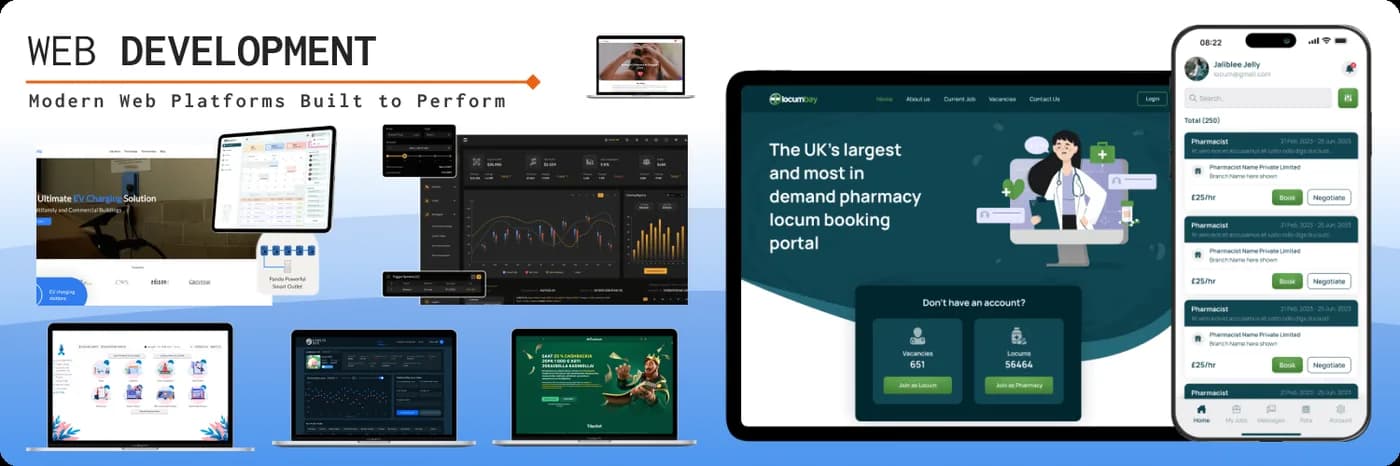
Off-the-shelf website builders (Wix, Squarespace) fail when scaling beyond basic brochures. Custom web applications engineered with modern frameworks (Next.js, React, Node.js, Django) deliver sub-second page speeds, complete IP ownership, and unlimited integration flexibility.

Modern Frontend & Backend Stack Selection
In 2026, the modern web standard centers on Next.js 15+ and React 19 for frontend rendering, coupled with Node.js (NestJS / Fastify) or Python (Django / FastAPI) for backend services. Next.js App Router and React Server Components (RSC) drastically reduce client-side JavaScript bundle sizes by rendering heavy components on the edge server.
For databases, PostgreSQL remains the undisputed gold standard for transactional data, paired with Redis for in-memory caching and Prisma or TypeORM for type-safe database queries.
Infrastructure as Code & Cloud Scalability
Modern applications are never deployed manually via SSH. Everything is codified through Terraform and containerized via Docker. Deploying on AWS (ECS / EKS), Google Cloud, or Vercel ensures that if traffic spikes from 1,000 to 100,000 visitors, horizontal pod autoscalers scale compute instances smoothly without downtime.
Automated monitoring via Datadog, Sentry, and OpenTelemetry ensures that latency spikes and error exceptions are caught and alerted immediately before users notice.

Frequently Asked Questions
Architectural scope: data model complexity, concurrent user loads, real-time WebSocket feeds, third-party integrations (ERP, CRM, payment gateways), and compliance standards (SOC 2, HIPAA) determine engineering hours.
Key Architectural Takeaways
- Web development cost is driven by architectural complexity, third-party integrations, and concurrent traffic demands.
- Next.js App Router and React Server Components cut client-side JS bundles by up to 60%, delivering sub-second page loads.
- PostgreSQL paired with connection pooling and Redis caching provides the most scalable data foundation.
- Automated CI/CD pipelines and Terraform Infrastructure-as-Code prevent technical debt and ensure seamless scale.
Planning a Custom Web Application?
Our full-stack engineering studio architects scalable, accessible, and high-performance web systems tailored to your business needs.